Project scope
Close out roof-space work with a useful follow-up record
Keep products, findings and later observations traceable.
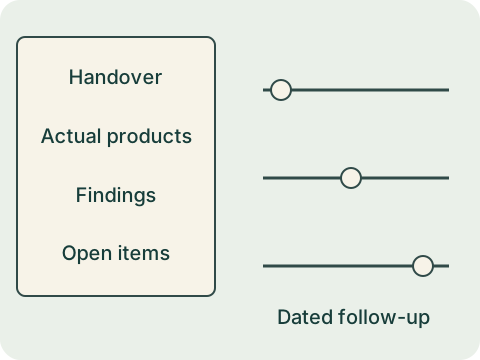
Compare work with the accepted scope
Review the written proposal and authorized changes against the work and products documented by the responsible parties. Ask for actual model information, installed counts and relevant product instructions. Distinguish a homeowner visual observation from technical acceptance or a professional finding.
Record outstanding work with location, responsibility and the agreed next step. Do not mark a moisture question resolved because a surface is dry during the walkthrough. The evidence should show what was assessed, what changed and what limitations remain.
Preserve assumptions and findings
Save the area worksheet's original inputs, ratio source, allocation assumption and manufacturer specifications. Recalculate if the actual installed inventory differs, without converting a numerical match into a compliance claim. Keep the responsible review and any required local records alongside the arithmetic.
Where air leakage, insulation or exhaust work was part of the project, preserve that scope separately. A vent-area total cannot summarize every task or certify the building envelope. Record any professional follow-up advice in its actual terms rather than turning it into a universal monitoring schedule.
Use later observations carefully
A homeowner can keep dated ordinary observations and relevant weather context, using the limits of the access plan. If the original concern repeats or changes, preserve the new evidence and contact the appropriate reviewer. Do not diagnose a failure from one event or use the absence of an event as a guarantee.
The closeout brief should list completed scope, documents received, open questions and follow-up responsibilities. It should not declare the home mould-free, energy-efficient or safe from ice problems. A traceable record is useful because it allows the next assessment to begin with the actual products, work and observations.
A worked planning example
The installed-product schedule differs from the preliminary worksheet, while the reviewer supplied a separate finding about a leakage path. Update the inventory using actual product data and retain the review finding separately. One should not be used to overwrite the other.
At follow-up, a homeowner records that the original symptom did not occur during one observed event. Preserve that observation and its context without declaring permanent resolution. If another event raises a concern, the next reviewer can compare actual products, work and dated evidence. This is a useful project history because it remains precise about what was done, observed and still uncertain.
Keep in your brief
- Keep arithmetic and technical findings separate.
- Record actual installed products.
- Monitor observations without a blanket clearance.
Primary references
- Home renovations — Office of Consumer Affairs
Canada: consumer planning overview
- Addressing moisture and mould in your home — Health Canada
Canada: household health information
- Keeping the heat in, section 5: roofs and attics — Natural Resources Canada
Canada: building-envelope education; local requirements differ