Observation
Make a roof-space observation record before choosing work
Keep dates, locations and evidence separate from a diagnosis.
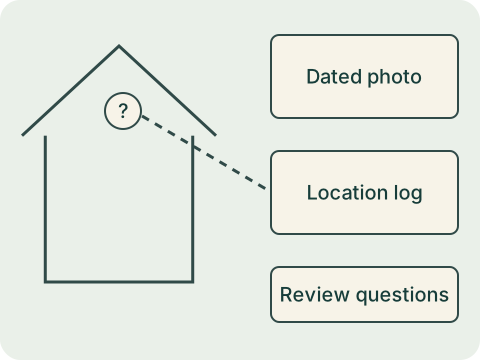
Record the symptom in ordinary language
Describe what you actually noticed: a stain, visible water, a recurring odour, an ice pattern or a reported damp area. Record location, date and circumstances you know. 'Water was visible beside this opening after rain' preserves evidence; 'the vent system failed' introduces a cause that still needs investigation.
Use existing records or photographs taken from ordinary accessible positions. Do not climb onto a roof, enter an unsafe space or disturb suspect materials to improve a web record. Access and investigation need a task-specific plan by the responsible party.
Keep weather and household information as context
Record known weather, equipment use and prior repairs without claiming that any one explains the observation. If you include a temperature or humidity reading, save the instrument location and time. A spot reading is context, not a diagnosis or a universal pass/fail test.
Health Canada's moisture guidance supports investigating recurring moisture sources. The portal does not determine whether a mark is mould, a roof leak or condensation. Ask the reviewer what further evidence is needed and preserve their findings and limitations separately from your original observation.
Ask focused review questions
List which roof areas are involved, whether the observation repeats and what previous work is documented. Ask how the proposed investigation will distinguish roof water entry, indoor-air leakage, exhaust routing and other possible mechanisms. Do not select a remedy just because it can be drawn on a schematic.
Use the record as a question brief and update it after appropriate review. Keep the initial observations rather than replacing them with a generalized verdict. If work is proposed, ask for its defined scope, assumptions and verification plan. The useful outcome is a traceable assessment path, not a calculator declaring the roof dry or safe.
A worked planning example
A stain is recorded in one location after rain, while a separate odour was reported in another season. Keep two entries rather than combining them into one ventilation-failure story. Each entry should preserve the actual timing, location and source of the observation.
A reviewer may ask for different follow-up evidence for the two concerns. Record those requests and any limits on access. If one symptom stops after a repair, keep that outcome as an observation rather than a family-wide moisture clearance. A later recurrence can then be compared with the actual earlier record, helping the assessment without creating an automatic cause classifier.
Keep in your brief
- Log observations without assigning a cause.
- Do not improve evidence through unsafe access.
- Keep reviewer findings distinct from original notes.
Primary references
- Addressing moisture and mould in your home — Health Canada
Canada: household health information
- Residential roofing — CCOHS
Canada: occupational safety education; applicable law is jurisdiction-specific
- Keeping the heat in, section 5: roofs and attics — Natural Resources Canada
Canada: building-envelope education; local requirements differ