Observation
Record ice and snow patterns without choosing a remedy remotely
Connect weather observations with a coordinated envelope review.
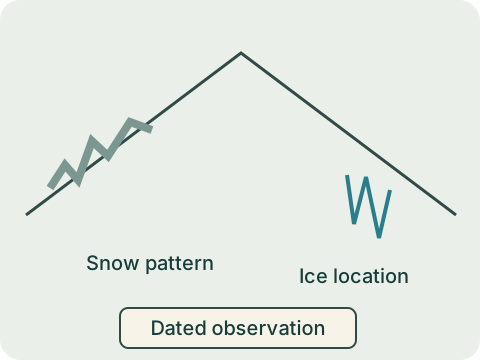
Describe the visible pattern from ordinary locations
Record the date, roof area and pattern seen from a normal accessible position. Note recent weather only where known. Keep photographs dated and identify the viewpoint. Do not climb onto the roof, remove ice or approach a hazardous overhang to complete this planning record.
NRCan explains roof and attic relationships involving heat, air leakage, insulation and ventilation. A photograph of an ice pattern does not establish which mechanism is operating in a particular home. The guide organizes evidence rather than diagnosing an ice dam or prescribing a roof intervention.
Connect the observation to the assembly questions
List known roof changes, insulation projects and reported moisture observations. Ask the reviewer which roof areas need separate consideration, especially where additions or compact roof sections are involved. Keep internal conditions unknown unless supported by appropriate documents or assessment.
Do not assume that a new vent, heated cable or insulation product will resolve the problem. Request the basis for any proposal and how its interactions with the existing assembly will be reviewed. Product instructions, local requirements and the actual site determine the relevant technical detail.
Keep weather response and long-term work separate
An immediate hazard needs the appropriate response and access plan, not a planning calculator. CCOHS identifies roof work and weather-related risks that require a task-specific approach. HAUSE intake is not represented as emergency snow or ice removal.
For a later project, save the observations, findings, scope and verification plan. The vent-area inventory can expose entered assumptions but cannot predict snow distribution or melt conditions. A useful brief supports a property-specific review without turning an illustrative seasonal mechanism into a guaranteed remedy.
A worked planning example
An exterior photograph shows a different snow pattern over an addition than over the main roof. Keep the two areas labelled and record the known weather date. The difference raises a review question; it does not prove that one area has inadequate ventilation.
Ask how roof geometry, envelope details and other relevant conditions will be evaluated. Any immediate access or ice hazard requires an appropriate response plan rather than a new worksheet entry. Save the later professional findings and proposed scope separately from the photograph. This lets the image retain its useful evidence without allowing a schematic winter mechanism to dictate a retrofit.
Keep in your brief
- Photographs are evidence, not a cause finding.
- Do not access the roof for the worksheet.
- Separate immediate hazards from later planning.
Primary references
- Keeping the heat in, section 5: roofs and attics — Natural Resources Canada
Canada: building-envelope education; local requirements differ
- Keeping the heat in, section 4: comprehensive air leakage control — NRCan
Canada: building-envelope education
- Residential roofing — CCOHS
Canada: occupational safety education; applicable law is jurisdiction-specific