Project scope
Coordinate ventilation questions with reroofing
Keep the weather boundary, product specifications and roof-space questions connected.
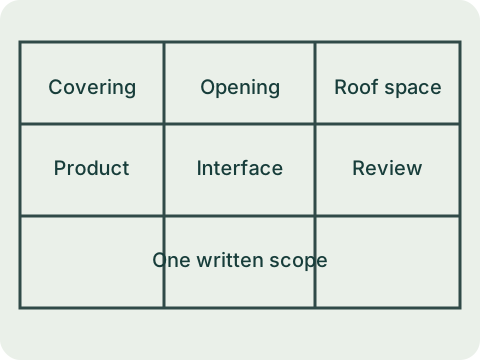
Define what the roof proposal actually changes
Ask the roofer to identify the areas, products and penetrations included in the written scope. Distinguish replacement of a visible vent product from a proposed change to the roof-space system. The same roof opening may involve weather-layer work and separate ventilation questions.
Provide available product information and prior assessment records. If a roof-space condition is unresolved, identify who will assess it and whether that review must precede product selection. Do not assume that replacing the covering automatically corrects every interior moisture concern.
Compare product and interface responsibilities
Request the actual vent models and manufacturer information, including net-free area where relevant. Ask who confirms installation details and interfaces with the selected roof products. A larger advertised vent does not by itself establish that the roof compartments or intake paths suit it.
Keep insulation, air-sealing and household exhaust questions visible where the proposal interacts with them. Record who is responsible for each item and which parts are excluded. The project should preserve these boundaries rather than implying that one trade has assessed systems outside its stated scope.
Document changes and closeout
Use entered quote amounts and quantities from the written proposal; no market rates are supplied by the planning tool. If a product or assessed condition changes, request a revised scope and price treatment before dependent work. Preserve the original and updated specifications.
At handover, collect the actual installed-product information, warranty terms and relevant review or inspection records. Ask how outstanding observations will be followed up. A completed roof scope is not a universal indoor-moisture clearance. The useful result is a connected record of products, responsibilities and unresolved questions.
A worked planning example
A reroofing proposal replaces the existing vent model but does not describe a moisture assessment. Record the replacement scope accurately and keep the moisture question open. Do not imply that a new product automatically constitutes a complete roof-space review.
If a later assessment changes the product or related work, obtain a revised specification and price treatment. Ask which roof-covering interfaces and other trades are affected. Keep the accepted scope, change record and installed-product information together at handover. This preserves the substantial reroofing work while preventing its completion from becoming an unsupported declaration about all indoor-air or roof-space conditions.
Keep in your brief
- Replacing a product and changing a system are different scopes.
- Ask for actual models and interfaces.
- Keep unassessed conditions visible.
Primary references
- Home renovations — Office of Consumer Affairs
Canada: consumer planning overview
- Keeping the heat in, section 5: roofs and attics — Natural Resources Canada
Canada: building-envelope education; local requirements differ
- Renovating for energy efficiency — NRCan
Canada: energy-renovation planning