Observation
Prepare a condensation question record
Preserve seasonal context without calculating a remote diagnosis.
Log the observation, not the conclusion
Write what was seen, where and when. A damp surface, droplets, staining or an odour can prompt review, but the record should not label every case condensation. Note weather and household circumstances you actually know, along with prior repairs or assessments.
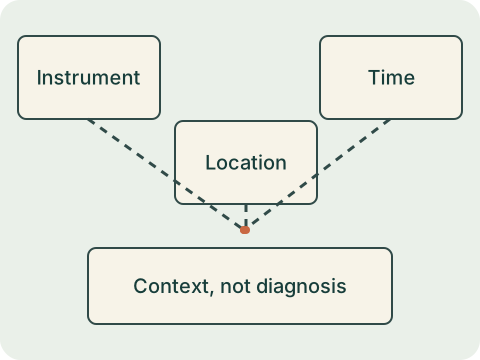
If readings are available, retain the instrument type, location and time. Do not present a single relative-humidity value as a universal acceptance threshold. Conditions vary through the home and season, and the portal does not model hidden surfaces or establish the moisture source.
Ask what mechanisms need to be distinguished
A reviewer may need to consider water entry, indoor-air leakage, exhaust routing and other conditions. The record can organize those questions without ranking them from a short questionnaire. Health Canada's moisture guidance supports looking for the cause when dampness or mould concerns recur.
Keep roof geometry, known changes and accessible evidence together. Ask which areas or events require further observation and what limitations apply. Do not perform hazardous access or disturb materials to investigate an online hypothesis. The task-specific assessment plan belongs to the responsible party.
Plan follow-up from actual advice
Record any follow-up dates and evidence requested by the reviewer. A homeowner can maintain a dated log of ordinary observations, but should not interpret disappearance during one visit as a complete resolution. Keep the original record and later findings distinct.
If work is proposed, ask which assessed condition it addresses, what assumptions it uses and how the outcome will be reviewed. The area tool does not predict condensation or establish clearance. A useful monitoring record describes what changed, what was observed and which questions remain, without promising that ventilation alone will eliminate moisture.
A worked planning example
A log contains one reading taken near an accessible hatch and another taken in an occupied room at a different time. Do not average them into a single 'attic humidity' result. Preserve the instrument location and time because they describe different observations.
The reviewer may request a more appropriate monitoring approach or investigate other possible sources. Record that advice rather than supplying a universal threshold from the portal. If the household changes equipment use or a repair is made, note the date and description. The sequence helps interpret later observations while avoiding a claim that any one reading establishes the cause, safety or resolution of the concern.
Keep in your brief
- No humidity acceptance threshold is supplied.
- Preserve timing and location.
- Use findings to define follow-up.
Primary references
- Addressing moisture and mould in your home — Health Canada
Canada: household health information
- Keeping the heat in, section 5: roofs and attics — Natural Resources Canada
Canada: building-envelope education; local requirements differ
- Ventilation and the indoor environment — Health Canada
Canada: indoor-environment information
- Residential roofing — CCOHS
Canada: occupational safety education; applicable law is jurisdiction-specific